Thoughtful Counseling for Couples, Families, & Students in Clemson, SC
Suggested Readings & Emotional Wellness Resources
Please be aware that some of the links to suggested readings will indicate that a paid subscription is required to view the link (Medium, Psychoanalysis), and the links to Audible books will allow the listener only a “sample” narration of the audiobook that is linked, after which the listener will be required to purchase a subscription to Audible-and purchase the Audible book to gain access to the complete book.
At A Time to Heal, we guide clients toward supportive mental health resources, reflective reading, and self-awareness tools that can complement personal growth and therapeutic work.
The following literature and tools are third-party resources that may be suggested when appropriate. They are not substitutes for therapy or diagnosis, but can serve as helpful companions for emotional awareness, self-reflection, and personal development.
🌿 A Supportive Reminder
Emotional awareness, identity exploration, and relationship understanding are not linear processes. Many people move through periods of reflection, uncertainty, and growth at different points in life.
What supports long-term emotional well-being is not having all the answers immediately, but developing the ability to observe thoughts, patterns, and experiences with patience, curiosity, and self-understanding.
🧭 Explore What Supports Your Growth
If you are in a season of reflection, emotional exploration, or working to better understand your relationships or internal experiences, these resources may offer helpful perspective and grounding.
At A Time to Heal, we view emotional education as part of a broader journey toward clarity, stability, and healthier connection with self and others.
Recommended Reading
Selected articles and books to support reflection, awareness and growth.
🧠 How to Set Boundaries When You’ve Been Abandoning Yourself
This article explores emotional self-abandonment patterns, including people-pleasing, emotional neglect, and difficulty prioritizing personal needs.
It focuses on understanding how individuals can reconnect with their internal needs after periods of emotional overextension.
What it helps explore
Self-abandonment and emotional disconnection
Difficulty setting boundaries
Recognizing internal emotional needs
Rebuilding self-trust
Beginning boundary development
Why it may be suggested
This resource may be helpful for individuals who are:
Struggling with people-pleasing patterns
Experiencing emotional burnout
Feeling disconnected from personal needs
Exploring boundary development
👨👩👧 Parenting & Communication Support Scripts
Parenting naturally involves moments where unexpected, difficult, or emotionally sensitive conversations arise without warning. In these situations, many caregivers may feel uncertain about how to respond in a way that is calm, clear, and appropriate for the child’s developmental stage.
This resource focuses on practical communication approaches that support healthier family dialogue and stronger emotional connection. It is designed to help caregivers respond with greater confidence, emotional steadiness, and openness during challenging moments, while maintaining trust and relational safety within the family dynamic.
👨👩👧 Parenting, ADHD, And Emotional Regulation
New findings in brain imaging research are reshaping the way many clinicians and parents understand ADHD. Rather than viewing attention-deficit/hyperactivity disorder as a single condition with the same underlying causes, researchers are beginning to identify distinct neurological patterns that may explain why some children struggle primarily with focus and impulsivity, while others experience intense emotional dysregulation, explosive frustration, or difficulty calming after stress. For parents who have long sensed that their child’s emotional reactions go beyond “typical ADHD,” this emerging research offers a more nuanced and compassionate framework for understanding behavior, emotional overwhelm, and developmental differences.
This article explores a recent large-scale brain scan study suggesting that certain forms of ADHD may involve deeper challenges with emotional regulation and stress response than previously recognized. It may be especially meaningful for parents searching for information related to ADHD emotional dysregulation, childhood emotional outbursts, executive functioning difficulties, highly sensitive children, or the connection between brain development and behavior. As research continues to evolve, studies like this may help families move away from shame-based interpretations of behavior and toward a more informed understanding of how children experience emotion, attention, frustration, and connection.
👨👩👧 Understanding Projective Identification in Parent–Child Relationships
This article explores the concept of projective identification, a psychological process in which intense or overwhelming emotions may be unconsciously disowned and experienced through another person. In parenting contexts, this can sometimes appear when a child or parent becomes the “carrier” of feelings that are difficult to recognize, regulate, or express directly within the family system.
From a relational perspective, these patterns can influence how misunderstandings develop, how emotional reactions escalate, and how roles within a family may become unintentionally shaped over time. Learning about these dynamics can support greater awareness, helping parents reflect on emotional communication, repair, and the ways feelings move within relationships—especially during moments of stress, transition, or conflict.
🧠 Dissociation, Emotional Survival, And Self-Awareness
Many people experience dissociation without fully realizing what it is or why it happens. It can appear quietly through emotional numbness, difficulty staying present, memory gaps, chronic “spacing out,” feeling disconnected from one’s surroundings, or functioning outwardly while internally feeling detached and exhausted. For individuals raised in emotionally unsafe, unpredictable, or chronically stressful environments, dissociation can become an adaptive survival response that continues long after the original circumstances have passed. Understanding these patterns can be an important step toward greater self-awareness, emotional grounding, and healthier relationships with both oneself and others.
This article explores subtle signs of dissociation through a practical and accessible lens, helping readers recognize experiences that are often misunderstood, minimized, or overlooked entirely. It may be especially meaningful for parents seeking to better understand the impact of stress and emotional overwhelm on both adults and children, particularly for those who did not grow up with emotionally healthy role models themselves. Resources like this can help foster greater compassion, emotional insight, and more intentional parenting patterns rooted in awareness rather than automatic survival responses.
Rupture and repair is a psychological framework describing how emotional connection is disrupted through conflict or miscommunication and restored through reconnection.
It is commonly used in attachment theory, couples therapy, and trauma-informed relationship work.
What this resource explores
Emotional rupture in relationships
Nervous system responses during conflict
Repair and emotional reconnection
Building relational resilience
Communication after disagreement
Strengthening emotional safety
Healthy relationships are not conflict-free—they are repair-capable.
Why it may be suggested
This resource may be helpful for individuals who are:
Experiencing recurring relationship tension
Struggling with conflict avoidance
Exploring emotional regulation in relationships
Working on communication patterns
🧠 Rupture and Repair in Relationships
This educational material explores narcissistic traits through a trauma-informed and neuroscience-based lens, including emotional defenses, attachment patterns, and relational dynamics.
It is used in clinical education to better understand complex emotional and interpersonal behaviors.
What this resource explores
Emotional defense mechanisms
Trauma and attachment influences
Shame and vulnerability dynamics
Empathy and boundary interaction
Relational stress responses
Why it may be suggested
This resource may be helpful for individuals who are:
Exploring difficult relationship dynamics
Seeking psychological education
Working through boundary challenges
Understanding emotional patterns
🧠 Understanding Narcissistic Traits (NICABM Resource)
Listening & Talks
Thought provoking conversations and insights to deepen understanding.
🧠 Parenting from the Inside Out (Audiobook):
This suggested listening resource explores how a parent’s own childhood experiences, emotional patterns, and internal narratives directly shape the way they relate to their children. Grounded in the work of Daniel J. Siegel and Mary Hartzell, the audiobook introduces key concepts from interpersonal neurobiology in a way that is accessible, practical, and deeply reflective. It emphasizes how self-awareness, emotional regulation, and mindful communication influence a child’s developing brain, offering insight into how secure attachment and resilience are built within the parent-child relationship.
Rather than focusing on surface-level parenting techniques, this work invites listeners to explore their own life stories as a foundation for more intentional parenting. Through guided reflection and research-informed perspectives, it supports the development of deeper empathy, stronger emotional connection, and healthier relational patterns within families. For those seeking to understand parenting through both a psychological and relational lens, this audiobook offers a thoughtful and grounded approach to raising emotionally attuned and resilient children.
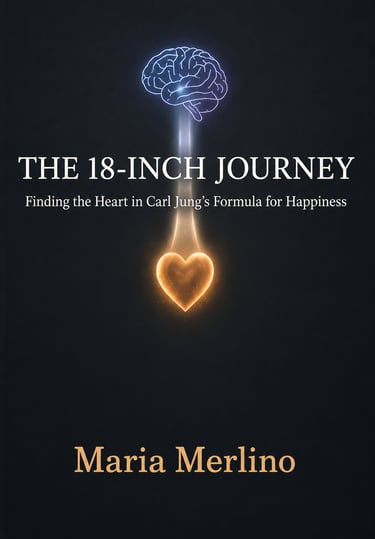
The 18 Inch Journey is a reflective framework inspired by depth psychology concepts associated with Carl Jung. It focuses on emotional balance through five core life areas: physical health, relationships, appreciation of beauty, stability, and meaning.
When these areas are imbalanced, individuals may experience stress or emotional fatigue. When supported together, they contribute to grounding and emotional stability.
What it includes
Reflection prompts
Daily awareness practices
Emotional regulation exercises
Self-guided insight tools
Why it may be suggested
This resource may be helpful for individuals who are:
Feeling emotionally overwhelmed
Seeking structure or stability
Exploring Jungian psychology
Interested in reflective tools
🧠 Suggested Listening: Narcissistic Women: Unmasking The Female Narcissist And How To Talk To Women by Michael White
Narcissistic Women: Unmasking the Female Narcissist and How to Talk to Women by Michael White is a third-party educational resource that may be suggested for individuals seeking greater awareness of emotionally unhealthy relationship dynamics, manipulation patterns, emotional boundaries, and communication within dating and relational contexts.
This material explores topics commonly associated with narcissistic relationship patterns, including gaslighting, emotional manipulation, unhealthy attachment dynamics, self-worth, and boundary-setting. It also discusses confidence, communication skills, and recognizing compatibility in relationships, with an emphasis on developing greater emotional awareness and discernment over time.
Rather than framing all difficult relationships through labels alone, the resource encourages individuals to pay closer attention to recurring behavioral patterns, emotional imbalance, and the impact relationships may have on emotional well-being and personal stability.
Key ideas explored in this resource include:
Recognizing signs of emotionally manipulative relationship dynamics
Understanding gaslighting and emotional confusion in relationships
Strengthening personal boundaries and self-respect
Developing healthier communication and relational awareness
Identifying patterns associated with emotionally unhealthy attachment
These themes are commonly discussed within broader conversations related to emotional health, relationship dynamics, self-awareness, and personal growth.
Why A Time to Heal may suggest this resource
This material may be helpful for individuals who are:
Recovering from emotionally unhealthy or manipulative relationships
Struggling with self-worth or boundary-setting in dating relationships
Seeking greater awareness of relational red flags and emotional patterns
Interested in improving communication, discernment, and emotional clarity
It is intended as an educational and reflective resource for personal awareness and learning, not as a diagnostic framework or substitute for professional mental health care.
A supportive reminder
Resources focused on relationship dynamics are often most helpful when approached with reflection, balance, and self-awareness rather than fear or labeling. The goal is not to encourage distrust of others, but to support healthier emotional boundaries, clearer communication, and more grounded relational choices over time.
🧠 The 18 Inch Journey: Emotional Balance Framework
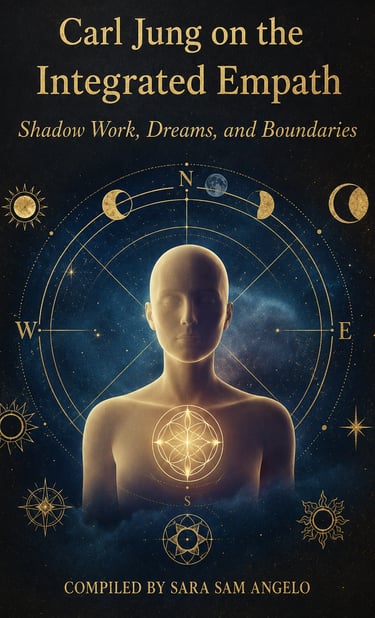
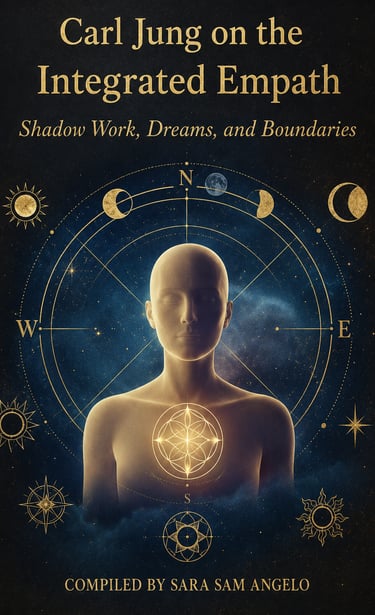
🧠 Carl Jung on the Integrated Empath: Emotional Boundaries, Shadow Work & Inner Balance
Carl Jung on the Integrated Empath is a third-party educational resource that may be suggested for individuals who experience high emotional sensitivity, empathy overload, or difficulty maintaining emotional separation in relationships.
Rooted in Jungian psychology, this material explores core depth-psychology concepts such as shadow work, individuation, emotional projection, and inner integration. It focuses on how emotional sensitivity can become overwhelming when internal boundaries are unclear or underdeveloped.
Rather than viewing sensitivity as a limitation, this framework emphasizes integration—understanding emotional responses more deeply so they can be processed with greater awareness, stability, and balance.
Key ideas explored in this resource include:
Recognizing and integrating suppressed emotional material (shadow work)
Understanding emotional projection in relationships
Using dream reflection as a tool for self-awareness
Strengthening emotional boundaries and internal regulation
Developing grounded intuition without emotional overload
These concepts are widely discussed in analytical psychology and depth-oriented therapeutic models focused on long-term emotional development and self-awareness.
Why A Time to Heal may suggest this resource
This material may be helpful for individuals who are:
Experiencing emotional overwhelm or empathy fatigue
Struggling with relational boundaries or emotional absorption
Noticing patterns of over-identification with others’ emotions
Interested in Jungian psychology or depth-oriented self-exploration
It is intended as an educational and reflective resource for awareness and integration, not as a clinical framework or identity definition.
A supportive reminder
This resource works best as a reflective companion rather than a label or explanation of identity. The focus is on developing emotional clarity, internal balance, and healthier relational awareness over time.
A Time to Heal
Mental health consulting and educational support. Not a substitute for licensed care.
Contact
© 2026. All rights reserved.
Address
226 Frontage Rd, Clemson, SC 29631
Serving individuals and families in Upstate, South Carolina and those searching for thoughtful counseling and behavioral health support nearby.